
Pediatric Eye Examinations: Essential Guide to Children’s Vision Health and Early Detection
Pediatric eye examinations are structured clinical visits that assess a child’s visual acuity, eye alignment, eye health, and developmental vision milestones to detect problems early and protect lifelong sight. This guide explains why these exams matter, when to schedule them by age, what to expect during an appointment, common conditions discovered, and practical prevention steps parents can take. Many parents confuse basic vision screening with a comprehensive pediatric eye exam; knowing the difference helps families get the right care that supports learning, social development, and safety. Early detection reduces risk of permanent vision loss from treatable conditions and improves classroom performance when refractive errors or binocular vision problems are corrected. The article maps steps parents can take before and after a visit, shows an age-by-age screening table for quick reference, and describes signs teachers and caregivers can use to prompt earlier evaluation. Throughout, terms like photoscreening, retinoscopy, amblyopia, strabismus, and myopia control are explained in plain language so parents can act with confidence.
Why Are Pediatric Eye Exams Important for Children’s Health?

A pediatric eye exam is a preventive health visit that identifies visual problems affecting learning, development, and safety by evaluating the eyes’ structure and function. Regular exams detect amblyopia, strabismus, and refractive errors early, allowing treatment that leverages childhood neuroplasticity to restore or preserve vision. Detecting problems early reduces barriers to reading, classroom participation, and motor-skill development, which supports both academic and social milestones. Understanding these benefits leads directly into how vision affects learning and the specific risks of missed diagnoses.
How Do Eye Exams Impact Children’s Learning and Development?
Visual function supports reading fluency, board work, and depth perception required for playground safety; inadequate vision can mimic attention or learning problems. When a child struggles with near tasks or distance clarity, teachers may attribute difficulties to behavior rather than vision, so an exam clarifies the underlying cause. Screening identifies refractive errors and binocular dysfunctions that, once corrected, often improve reading speed and classroom engagement. Clarifying vision-related learning issues helps parents and educators choose appropriate interventions and referrals.
What Are the Risks of Undetected Vision Problems in Children?
Untreated vision disorders can cause delayed language or motor milestones, poorer academic performance, and increased injury risk from impaired depth perception. Amblyopia remains more treatable when caught early; delayed treatment increases the chance of permanent vision loss in the weaker eye. Even mild uncorrected refractive error can reduce reading comprehension and attention, so timely evaluation and follow-up are critical. Recognizing these risks highlights why scheduling age-appropriate exams is essential for child health.
How Early Detection Prevents Permanent Vision Loss in Kids?
Early detection leverages developmental windows when the visual system is most adaptable, so interventions like patching or corrective lenses produce better outcomes. Conditions such as amblyopia respond best when treatment begins in infancy or early childhood because neural pathways for vision are still forming. Prompt referral and adherence to treatment timelines improve prognosis and reduce long-term disability from preventable causes. Knowing the time-sensitive nature of treatment motivates timely appointments and consistent follow-up.
When Should Children Have Their Eye Exams? Age-by-Age Pediatric Vision Screening Guide
An age-based exam schedule ensures clinicians check vision at critical developmental milestones and catch problems when interventions are most effective. The table below provides a concise, parent-facing schedule with the recommended exam type and brief action notes for each age range.
The following quick-reference schedule helps parents and caregivers plan visits and recognize when to seek earlier evaluation.
| Age Range | Recommended Exam Type | Notes/Action |
|---|---|---|
| Newborn | Red reflex screen (nursery) | Look for white reflex or asymmetry; urgent referral if abnormal |
| 6–12 months | First comprehensive pediatric eye exam | Detect congenital cataract, alignment issues, and refractive risk |
| 1–3 years | Risk-based assessments/photoscreening | Use photoscreeners or clinician exam if risk factors present |
| 3–5 years | Comprehensive eye exam with acuity testing | Formal vision check before preschool; start amblyopia screening |
| School-aged (5+) | Annual or biennial comprehensive exams | Monitor refractive changes, myopia progression, and school performance |
This age-by-age table clarifies timing and triggers for referral so parents can act when screening findings or behaviors are concerning.
What Eye Exams Are Recommended for Newborns to 12 Months?
Infants typically receive a red reflex check at birth to screen for serious media opacities and congenital cataract, followed by a first comprehensive exam around 6–12 months to assess alignment and ocular structure. Photoscreening or clinician-based assessments detect large refractive errors or asymmetry even before reliable acuity measures are possible. If an abnormal red reflex or alignment concern appears, prompt referral to a pediatric ophthalmologist is advised. Early infant checks prioritize rule-out of conditions that require timely surgical or medical management.
How Often Should Toddlers and Preschoolers Get Eye Exams?
Toddlers and preschoolers should have at least one comprehensive eye exam by age 3, with follow-up frequency determined by risk factors such as family history, premature birth, or observed developmental delays. Photoscreening remains useful for nonverbal children and can trigger a full exam when results are abnormal. If treatment like patching or glasses is started, closer monitoring is necessary to track progress and adjust therapy. Recognizing concerning signs between scheduled visits supports earlier evaluation when needed.
What Is the Recommended Schedule for School-Aged Children?
School-aged children benefit from annual or biennial comprehensive exams based on risk, academic demands, and prior findings; monitoring is particularly important for myopia progression during growth spurts. Regular checks help ensure prescriptions are updated, binocular vision is functioning, and any learning-related visual problems are addressed. Coordination with school screenings improves detection but does not replace a full eye exam when concerns arise. When myopia or binocular dysfunction is detected, discuss myopia control and treatment options with an eye care professional.
What to Expect During a Pediatric Eye Examination? Step-by-Step Overview for Parents
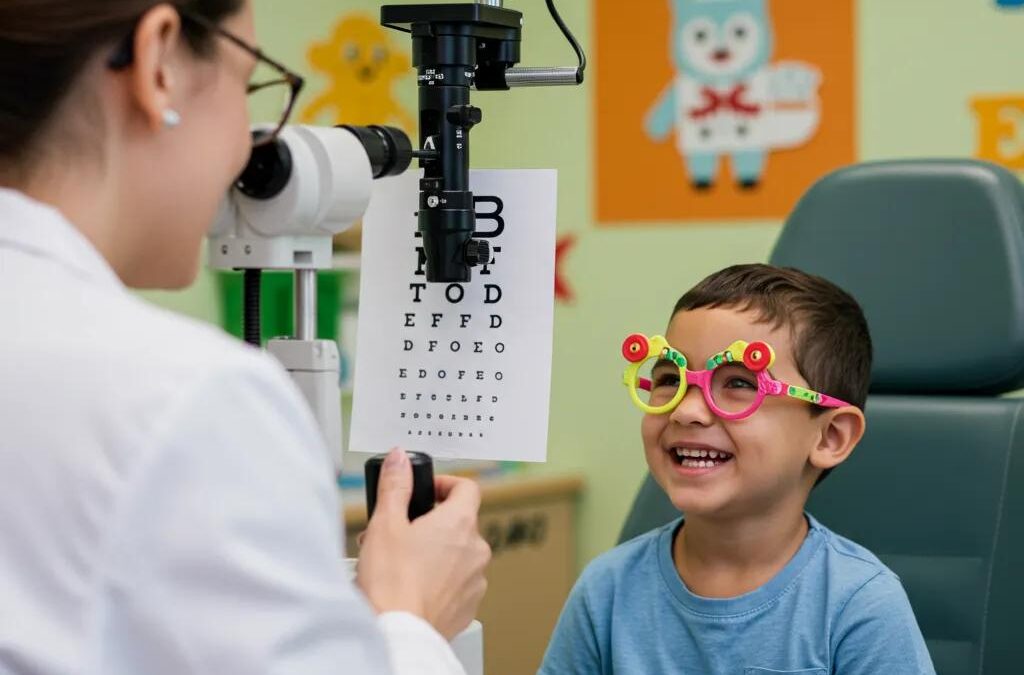
A pediatric eye exam follows a predictable flow that balances clinical testing with child-friendly interaction to obtain accurate information about vision and eye health. Parents can expect a short medical history and developmental screening, followed by age-appropriate tests to assess acuity, alignment, and internal eye health. The clinician will explain any findings, recommend treatments or referrals, and outline follow-up timing. Knowing the stepwise process reduces anxiety and prepares families for practical next steps after the visit.
Which Age-Appropriate Tests Are Performed in Children’s Eye Exams?
Common tests include visual acuity using age-appropriate charts (Lea symbols, HOTV), cover/uncover and ocular motility tests for alignment, retinoscopy or autorefraction for refractive assessment, and photoscreening for young nonverbal children. Each test detects specific issues: acuity for clarity, cover tests for strabismus, retinoscopy for prescription estimation, and photoscreening for significant refractive asymmetry. Parents usually observe interactive testing and can ask for explanations, which helps acceptance and follow-up.
How Is Eye Dilation Used and Why Is It Important?
Dilation enlarges the pupil to allow a thorough internal eye exam, revealing retinal or optic nerve problems and enabling accurate refractive measurement in some children. Drops commonly cause light sensitivity and blurred near vision for several hours; planning for sunglasses and supervision after the visit helps. Dilation is recommended when internal examination is needed or when precise refractive measurements are required, especially in younger children or when vision problems are unexplained. Preparing for temporary effects and arranging transportation for younger children makes the visit smoother.
How Are Results Communicated to Parents and Caregivers?
Results are typically discussed in person at the visit with a written summary or care plan outlining glasses prescriptions, treatment options like patching, and referral recommendations when necessary. Clinicians provide timelines for follow-up and clear instructions for home therapies, plus red flags that warrant urgent care. When treatment is prescribed, tracking adherence and progress through scheduled visits ensures the best visual outcomes. This communication model supports shared decision-making between families and providers.
What Are Common Childhood Eye Conditions Detected in Pediatric Exams?
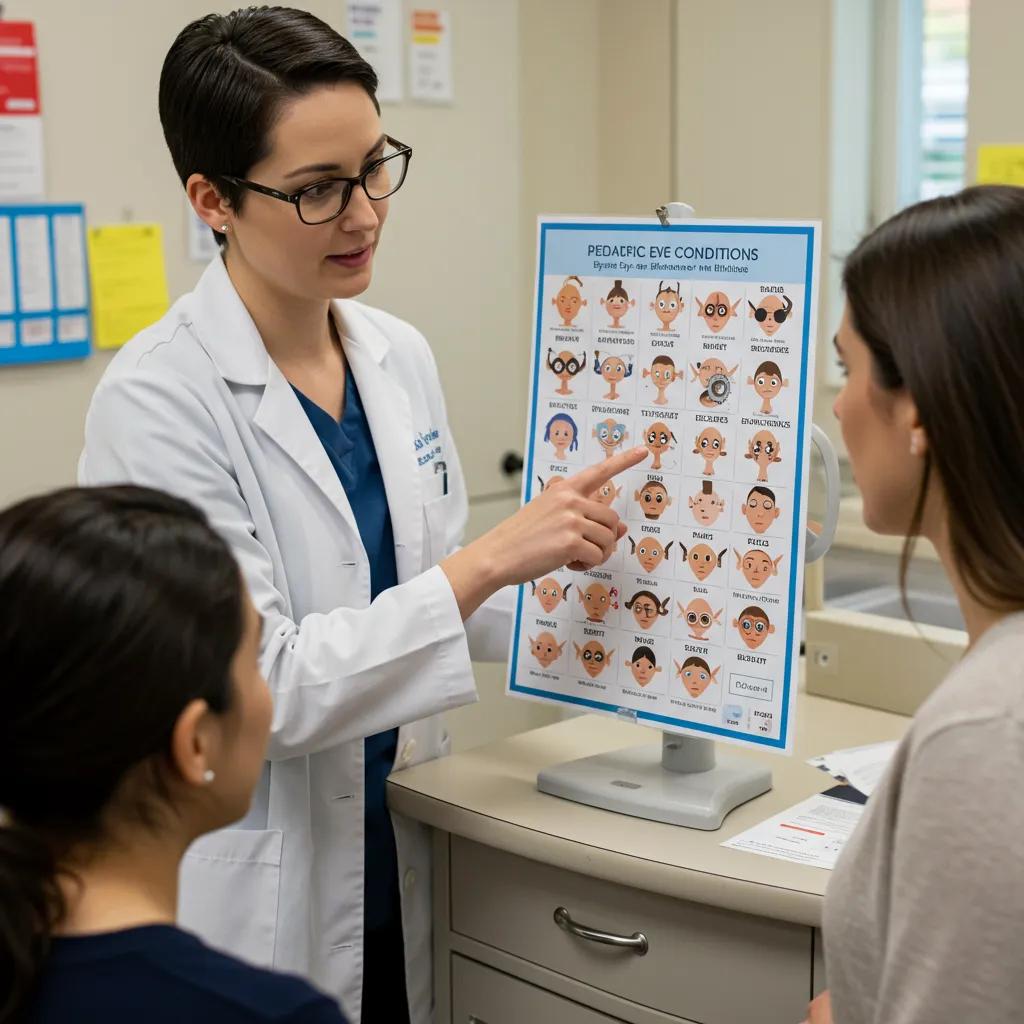
Pediatric exams commonly detect conditions that range from correctable refractive errors to alignment disorders and vision development disorders that require timely intervention. The table below compares common conditions, signs parents might notice, and typical next steps so caregivers understand diagnosis and management pathways.
| Condition | Common Signs/Symptoms | Typical Treatment/Next Steps |
|---|---|---|
| Amblyopia | Favoring one eye, poor depth perception | Patching/atropine and vision therapy; early treatment improves outcome |
| Strabismus | Eyes that turn inward or outward, double vision | Glasses, prisms, vision therapy, or surgery depending on cause |
| Refractive errors | Squinting, poor school performance, headaches | Prescription glasses, contact lenses, myopia monitoring/control |
This comparison helps parents recognize red flags and expect evidence-based follow-up when conditions are identified.
How to Recognize and Treat Amblyopia in Children?
Amblyopia often presents as a child covering one eye, tilting the head, or having reduced visual behavior in one eye; objective screening during exams confirms the diagnosis. Treatment typically involves correcting refractive error, occlusion therapy (patching) or atropine penalization, and vision therapy when appropriate to encourage use of the weaker eye. Early initiation—during the critical period of visual development—yields the best outcomes, while delayed care reduces the likelihood of full recovery. Monitoring treatment adherence and visual response is essential for success.
Research highlights that early intervention is key for successful amblyopia treatment, as the visual system is most adaptable during critical developmental periods.
Early Amblyopia Treatment: Effectiveness and Outcomes in Children
Objective:To assess the effectiveness of early treatment for amblyopia in children.Design:Follow up of outcomes of treatment for amblyopia in a randomised controlled trial comparing intensive orthoptic screening at 8, 12, 18, 25, 31, and 37 months (intensive group) with orthoptic screening at 37 months only (control group).Setting:Avon, southwest England.Participants:3490 children who were part of a birth cohort study.Main outcome measures:Prevalence of amblyopia and visual acuity of the worse seeing eye at 7.5 years of age.Results:Amblyopia at 7.5 years was less prevalent in the intensive group than in the control group (0.6%v1.8%; P=0.02). Mean visual acuities in the worse seeing eye were better for children who had been treated for amblyopia in the intensive group than for similar children in the control group (0.15v0.26 LogMAR units; PWhat Causes and Manages Strabismus in Kids?
Strabismus results from misalignment due to muscular, neurological, or refractive causes and appears as inward (esotropia) or outward (exotropia) deviation of the eye. Management ranges from glasses and vision therapy to surgical alignment when non-surgical options are insufficient to restore binocular vision. Timely correction promotes proper binocular development and depth perception, and referral to pediatric ophthalmology is indicated for persistent or large-angle deviations. Addressing strabismus promptly reduces the risk of amblyopia and long-term functional impairment.
How Are Refractive Errors Like Myopia, Hyperopia, and Astigmatism Diagnosed?
Refractive errors are diagnosed by retinoscopy, autorefraction, and subjective acuity testing when possible; these tests determine the lens power needed to focus light on the retina. When a prescription is indicated, corrective lenses are provided and myopia progression is monitored during childhood growth. For children with progressive myopia, clinicians may discuss myopia control strategies and monitoring frequency to slow axial elongation and reduce long-term risk. Early identification ensures visual comfort and supports educational success.
How Can Parents Manage and Prevent Digital Eye Strain in Children?
Digital eye strain arises from prolonged near work, close viewing distance, and poor ergonomics; parents can use targeted behavioral strategies to reduce symptoms and support ocular comfort. Implementing structured breaks, ergonomic adjustments, and outdoor time helps reduce symptoms and may contribute to lower myopia risk over time. The guidance below outlines symptoms, prevention tactics, and the evidence linking near work and myopia progression so parents can take practical steps and discuss risk with their child’s eye care professional.
The following review emphasizes the importance of established protocols and consistent follow-up in effective pediatric vision screening.
Pediatric Vision Screening Protocols: A Comprehensive Review
Vision screening plays an important role in the early detection of children who have or probably are predisposed to have specific visual problems. The validity and reliability of the screening batteries in relation to the age group to be screened, and the person administering the test as well as the referral and follow-up criteria contribute to the overall outcome of the vision screening. Despite the long history of vision screening and significant improvement in the development of screening protocols, no agreement exists concerning the age at which children should be screened, the exact test batteries that should be included and who should conduct the screening. This review highlights some important aspects of the history of paediatric vision screening and available evidence in support of their use to detect visual conditions in children.The checklist below helps parents identify common symptoms and decide when to seek an exam.
- Children rubbing eyes, complaining of headaches, or showing intermittent blur are common symptom flags.
- If symptoms persist despite breaks and posture changes, schedule a pediatric eye exam for assessment.
- Symptoms coupled with academic changes or head tilting merit more urgent evaluation.
Strategy How it Works Practical Tips 20-20-20 breaks Reduces accommodative strain by shifting focus Set a timer to look 20 feet away for 20 seconds every 20 minutes Screen time limits Lowers continuous near work exposure linked to strain Create device-free periods and replace with outdoor play Ergonomic setup Improves posture and viewing distance to reduce fatigue Position screens at arm’s length and eye level when possible Applying these strategies consistently reduces symptoms and supports healthier visual habits for children.
What Are the Symptoms and Causes of Digital Eye Strain in Kids?
Common symptoms include headaches, eye rubbing, intermittent blurred vision, and loss of concentration after screen use; these stem from prolonged near focus, reduced blinking, and poor lighting. Close viewing distance and extended sessions of near work increase accommodative demand and ocular surface dryness, producing discomfort. If these symptoms occur regularly, a comprehensive pediatric eye exam can differentiate refractive or binocular causes from accommodative strain. Identifying causes enables targeted prevention and treatment.
What Prevention Strategies Help Reduce Screen-Related Eye Issues?
Practical prevention combines timed breaks, posture and distance adjustments, and increased outdoor time to reduce continuous near work and support ocular health. Enforce the 20-20-20 rule, set daily screen limits, encourage frequent blinking, and schedule regular outdoor play to break up near tasks. For children with persistent symptoms or refractive changes, discuss additional strategies with an eye care professional, including vision therapy or targeted myopia control options. These layered approaches reduce symptoms while addressing underlying visual demands.
How Does Digital Eye Strain Relate to Myopia Progression?
Recent studies indicate an association between increased near work, prolonged screen time, and higher incidence or faster progression of myopia, although genetics also play a significant role. Increasing outdoor time appears protective and is a practical preventive measure families can adopt alongside reduced continuous near work. Monitoring refractive status during growth and discussing myopia control interventions with an eye care professional helps manage risk for children showing progression. Proactive behavior changes plus clinical monitoring form a balanced strategy for families.
What Causes and Manages Strabismus in Kids?
Strabismus results from misalignment due to muscular, neurological, or refractive causes and appears as inward (esotropia) or outward (exotropia) deviation of the eye. Management ranges from glasses and vision therapy to surgical alignment when non-surgical options are insufficient to restore binocular vision. Timely correction promotes proper binocular development and depth perception, and referral to pediatric ophthalmology is indicated for persistent or large-angle deviations. Addressing strabismus promptly reduces the risk of amblyopia and long-term functional impairment.
How Are Refractive Errors Like Myopia, Hyperopia, and Astigmatism Diagnosed?
Refractive errors are diagnosed by retinoscopy, autorefraction, and subjective acuity testing when possible; these tests determine the lens power needed to focus light on the retina. When a prescription is indicated, corrective lenses are provided and myopia progression is monitored during childhood growth. For children with progressive myopia, clinicians may discuss myopia control strategies and monitoring frequency to slow axial elongation and reduce long-term risk. Early identification ensures visual comfort and supports educational success.
How Can Parents Manage and Prevent Digital Eye Strain in Children?
Digital eye strain arises from prolonged near work, close viewing distance, and poor ergonomics; parents can use targeted behavioral strategies to reduce symptoms and support ocular comfort. Implementing structured breaks, ergonomic adjustments, and outdoor time helps reduce symptoms and may contribute to lower myopia risk over time. The guidance below outlines symptoms, prevention tactics, and the evidence linking near work and myopia progression so parents can take practical steps and discuss risk with their child’s eye care professional.
The following review emphasizes the importance of established protocols and consistent follow-up in effective pediatric vision screening.
Pediatric Vision Screening Protocols: A Comprehensive Review
Vision screening plays an important role in the early detection of children who have or probably are predisposed to have specific visual problems. The validity and reliability of the screening batteries in relation to the age group to be screened, and the person administering the test as well as the referral and follow-up criteria contribute to the overall outcome of the vision screening. Despite the long history of vision screening and significant improvement in the development of screening protocols, no agreement exists concerning the age at which children should be screened, the exact test batteries that should be included and who should conduct the screening. This review highlights some important aspects of the history of paediatric vision screening and available evidence in support of their use to detect visual conditions in children.
The checklist below helps parents identify common symptoms and decide when to seek an exam.
- Children rubbing eyes, complaining of headaches, or showing intermittent blur are common symptom flags.
- If symptoms persist despite breaks and posture changes, schedule a pediatric eye exam for assessment.
- Symptoms coupled with academic changes or head tilting merit more urgent evaluation.
| Strategy | How it Works | Practical Tips |
|---|---|---|
| 20-20-20 breaks | Reduces accommodative strain by shifting focus | Set a timer to look 20 feet away for 20 seconds every 20 minutes |
| Screen time limits | Lowers continuous near work exposure linked to strain | Create device-free periods and replace with outdoor play |
| Ergonomic setup | Improves posture and viewing distance to reduce fatigue | Position screens at arm’s length and eye level when possible |
Applying these strategies consistently reduces symptoms and supports healthier visual habits for children.
What Are the Symptoms and Causes of Digital Eye Strain in Kids?
Common symptoms include headaches, eye rubbing, intermittent blurred vision, and loss of concentration after screen use; these stem from prolonged near focus, reduced blinking, and poor lighting. Close viewing distance and extended sessions of near work increase accommodative demand and ocular surface dryness, producing discomfort. If these symptoms occur regularly, a comprehensive pediatric eye exam can differentiate refractive or binocular causes from accommodative strain. Identifying causes enables targeted prevention and treatment.
What Prevention Strategies Help Reduce Screen-Related Eye Issues?
Practical prevention combines timed breaks, posture and distance adjustments, and increased outdoor time to reduce continuous near work and support ocular health. Enforce the 20-20-20 rule, set daily screen limits, encourage frequent blinking, and schedule regular outdoor play to break up near tasks. For children with persistent symptoms or refractive changes, discuss additional strategies with an eye care professional, including vision therapy or targeted myopia control options. These layered approaches reduce symptoms while addressing underlying visual demands.
How Does Digital Eye Strain Relate to Myopia Progression?
Recent studies indicate an association between increased near work, prolonged screen time, and higher incidence or faster progression of myopia, although genetics also play a significant role. Increasing outdoor time appears protective and is a practical preventive measure families can adopt alongside reduced continuous near work. Monitoring refractive status during growth and discussing myopia control interventions with an eye care professional helps manage risk for children showing progression. Proactive behavior changes plus clinical monitoring form a balanced strategy for families.